April 23, 2026
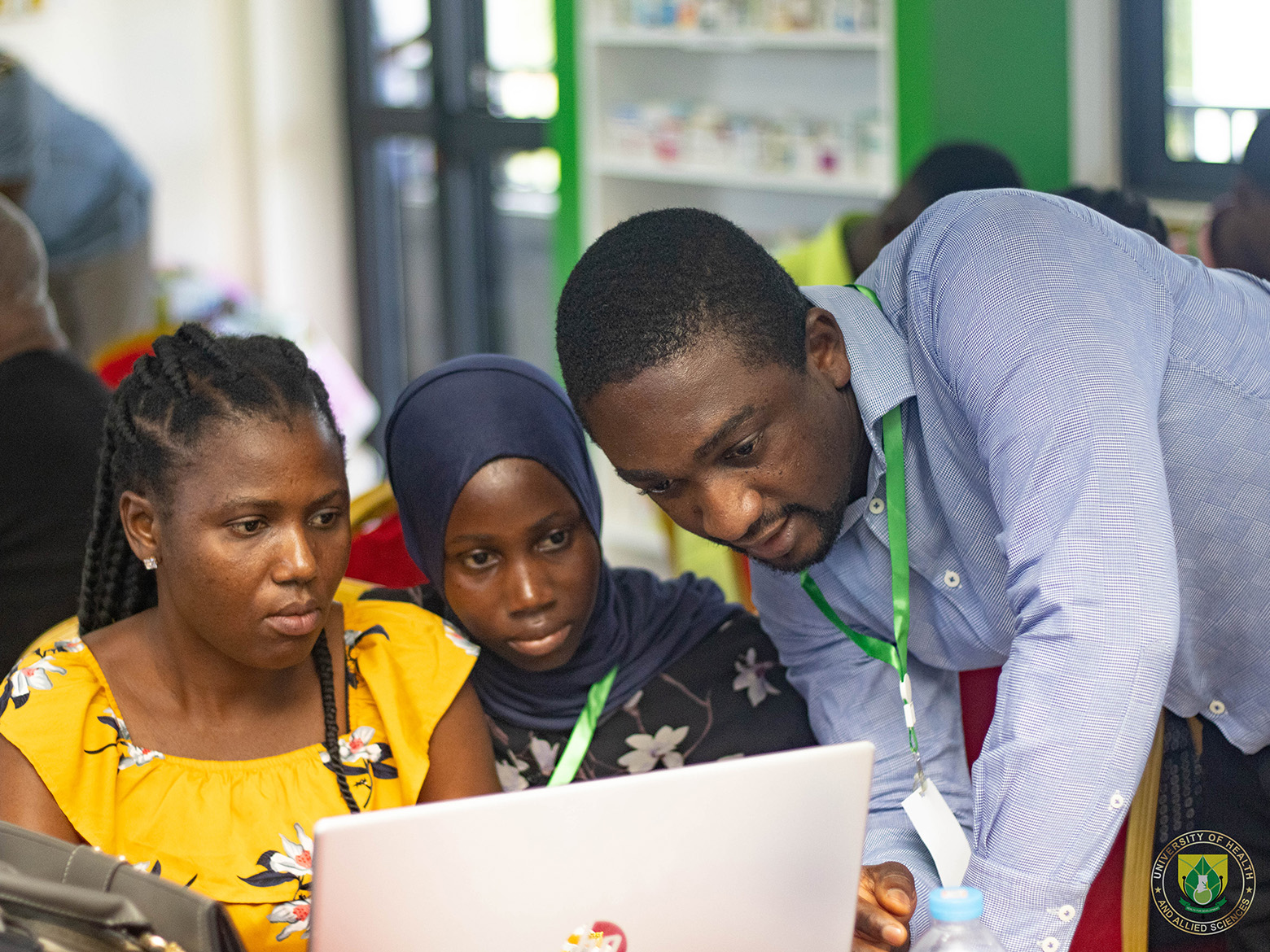
The University of Health and Allied Sciences (UHAS) School of Pharmacy successfully hosted a three-day intensive workshop from March 25 to 27, 2026, aimed at strengthening neuropharmacology research capacity among researchers, clinicians and graduate students in Ghana. Themed "Building Neuropharmacology Research Capacity for Mental Health in Ghana," the programme was funded and organised by the International Brain Research Organisation (IBRO) and the Wellcome Trust under the IBRO Neuroscience Capacity Accelerator for Mental Health (NCAMH) Programme. It forms a key component of the IBRO-funded project "Neurobiological mechanisms of antidepressant compounds from indigenous medicinal plants," which is designed to build sustainable neuroscience research capacity in Ghana through a UK-Ghana collaboration between UHAS and Ulster University, UK, supported also by the UK Department for the Economy.
The workshop was led by the primary organiser, Professor. Donatus Wewura Adongo of the Department of Pharmacology & Toxicology, SOP, UHAS, who also serves as Principal Investigator of the project. It was co-organised by Dr. Kofi Donkor of the Centre for Plant Medicine Research (CPMR), Dr. Augustine Tandoh, Dr. Benjamin Kingsley Harley and Dr. Emmanuel Dziwornu, all of UHAS. Guest facilitators included Dr. Charles Benneh, co-investigator on the IBRO–Wellcome NCAMH grant and Lecturer in Clinical Pharmacy at Ulster University, UK; Prof. Eric Woode of the Department of Pharmacology & Toxicology, SOP, UHAS; Dr. Ama Edwin of the University of Ghana Medical Centre; and Mr. Fidelis Anumu of the Institute of Health Research, UHAS. Dr. Evans Danso, Director of Policy, Planning, Monitoring and Evaluation at the Mental Health Authority of Ghana, also participated as a guest speaker. The workshop was facilitated by Dr. Inemesit Okon Ben and Dr. Jones Ofori-Amoah, both Senior Lecturers in the Department of Pharmacology & Toxicology, SOP, UHAS. The workshop brought together early-career researchers, clinicians and graduate students to explore critical issues in mental health and advance research-driven solutions.
Dr. Evans Danso underscored the importance of mental health as a cornerstone of individual well-being. He highlighted its far-reaching impact on families, communities and society, while drawing attention to the growing burden of mental health disorders across Africa. With over 150 million people affected, depression and anxiety remain the most prevalent conditions.
In Ghana alone, approximately 120 cases per 100,000 population were recorded in 2025. Dr. Danso stressed the urgent need for strengthened healthcare systems, noting that only about 2 percent of diagnosed cases receive optimal treatment due to limited funding, workforce shortages and inadequate access to psychotropic medications.
The workshop also examined systemic challenges, including financing, workforce and legislative gaps. Participants learned that many African countries allocate only about 2 percent of their health budgets to mental health, an amount widely considered insufficient. Discussions emphasised integrating mental health services into primary healthcare, promoting community-based interventions and leveraging technology to improve access.
Professor Eric Woode provided insights into the neuropharmacological basis of mental health conditions. He explained how neurotransmitters such as serotonin, dopamine and GABA influence mood, cognition and behaviour, stressing the complexity of mental health disorders and the need for multidisciplinary approaches. He encouraged participants to seize emerging research opportunities, emphasising collaboration across disciplines to improve patient outcomes.
Ethical considerations were a central theme, with Dr. Ama Edwin, Bioethicist at the University of Ghana Medical Centre (UGMC), delivering a session on research ethics. She emphasised respect for persons, beneficence and justice, highlighting informed consent as a continuous process. Dr. Edwin cautioned against ethical pitfalls such as privacy invasion and therapeutic misconception, urging researchers to uphold participant dignity and autonomy, particularly in vulnerable populations.
The workshop also featured sessions on neurobehavioral models, plant-based drug discovery and compound characterisation. Dr. Augustine Tandoh, a faculty member of UHAS-SOP and lead on an IBRO-sponsored grant, guided participants through animal-based neurobehavioral studies, stressing ethical conduct in experimental research. Dr. Benjamin Kingsley Harley, Senior Lecturer and Head of the Department of Pharmacognosy & Herbal Medicine at UHAS, introduced plant extraction and compound isolation techniques drawn from Ghanaian medicinal plants. Dr. Mike Okweesi Aggrey, also of the Department of Pharmacognosy & Herbal Medicine, discussed analytical methods for identifying bioactive compounds, drawing on his international research experience in China and his Novartis Global Health Fellowship. Together, these sessions underscored the workshop’s commitment to advancing pharmacological studies relevant to mental health.
Dr. David Adedia, Senior Lecturer from the Department of Basic Sciences, School of Basic and Biomedical Sciences, UHAS, focused on translating research into impact. He also led a session on statistical methods, experimental design, data visualisation and the use of software tools such as R.
Mr. Fidelis Anumu, Research Manager and Head of Research Operations at Institute of Health Research, UHAS, guided participants through the structure of competitive research proposals, budget justification and identifying funding opportunities.
Dr. Charles Benneh of Ulster University, UK, a co-investigator on the IBRO-funded project and principal investigator on a related UKRI/ISPF-funded project on antiepileptic compounds from Ghanaian medicinal plants, led a session on building research networks and international collaborations, using the UK-Ghana research partnership as a live case study.
Dr. Emmanuel Dziwornu, Senior Lecturer, Head of the Department of Psychological Medicine & Mental Health at UHAS School of Medicine, advocated for co-production approaches that integrate community voices in African mental health research.
Through expert-led sessions spanning ethics, neurobehavioral models, drug discovery, compound analysis, data science and grant writing, participants left the three-day workshop equipped with essential knowledge and practical skills in neuropharmacology research. The workshop concluded with participant presentations, and personal action planning. It represents a significant step towards positioning UHAS as a neuroscience research hub in West Africa, reinforcing the institution’s commitment to strengthening health research capacity in Ghana and beyond, a vision made possible through the generous support of IBRO, the Wellcome Trust, Ulster University and the UK Department for the Economy.