09 déc, 2025
Akpe
0 Commentaire
TAGS
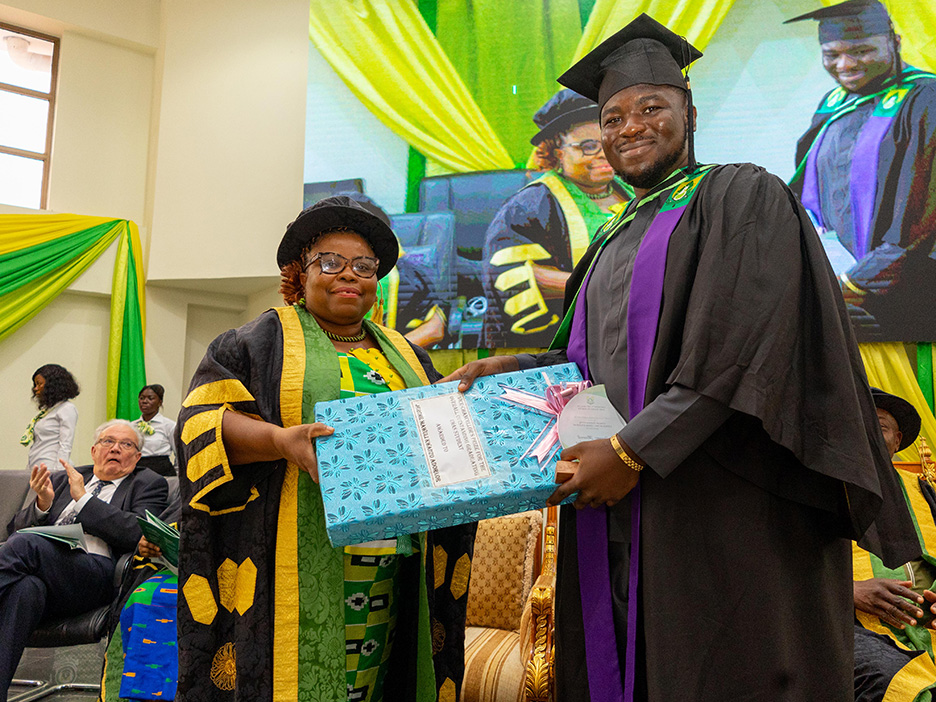
The University of Health and Allied Sciences (UHAS) on Thursday, December 4, 2025, held the first session of its 10th Congregation at the Cedi Auditorium at the main campus, Sokode-Lokoe, Ho.
In all, 1,374 undergraduates and post graduate students from the University’s six schools were conferred with various degrees. As part of the programme, 30 Oncology Nurse Leadership Programme (ONLEP) participants also graduated.
The Oncology Nurse Leadership Programme (ONLEP) in Africa is a 5-year project of a 6-month annual fully funded postgraduate certificate programme expected to train 240 Oncology nurses. This is a partnership between UHAS, International Society of Nurses in Cancer Care (ISNCC), City Cancer Challenge (C/Can) and Applied Molecular Genetics Inc. (AMGEN). The first cohort, which graduated as part of the first session of the 10th Congregation of the University were selected from public and private hospitals, faith-based hospitals, universities, advocacy organizations and Nursing Training Colleges from 7 countries on the continent of Africa, namely Ghana, Nigeria, Rwanda, Malawi, Kenya, South Africa and Gambia.
The Chairman of the University Council, Professor Kodzo Gavua, in his speech affirmed the University’s commitment to becoming Ghana’s premier destination for health professionals training. Professor Gavua commended UHAS alumni for their outstanding contributions to the health sector, noting that their achievements reflect the high-quality teaching and mentoring provided by the University’s faculty and staff. He expressed deep appreciation to the hardworking academic and administrative teams across the various Schools and Directorates, acknowledging their roles in elevating the University’s reputation.
He thanked the Government of Ghana for its continuous support in providing facilities and resources to enhance teaching and learning. Looking ahead to the admission of new students in January 2026, Professor Gavua raised concerns about challenges with ongoing infrastructure projects. He noted that key projects including the 5.3-kilometre internal road network on the Ho campus, the Laboratory Complex, the Fodome Campus project expected to house the Fred N. Binka School of Public Health and other GETFund-funded infrastructure projects remain incomplete. He therefore made a strong appeal to the Minister of Finance to expedite action on the release of funds to the relevant executing agencies to ensure timely completion.
The Vice Chancellor, Professor Lydia Aziato, in her state of the University address, itemized several landmark accomplishments recorded in the 2024/2025 academic year. She disclosed that the University has introduced new undergraduate and postgraduate programmes.
The Vice Chancellor also highlighted the commissioning of key academic and clinical facilities, including the Dental Clinic equipped with phantom heads and dental chairs, a new Counselling and Wellness Centre, Medical Imaging Simulation laboratory, Zebra Fish laboratory, pharmaceutical research facilities and new simulation spaces for Audiology, Physiotherapy and Speech Therapy.
Professor Aziato further reported positive gains in student admissions and enrolment, with 10,292 students currently studying across the University’s eight schools. She also revealed excellent performance in national professional examinations, noting a 100% pass rate in several areas of the Nursing and Midwifery Licensing examinations and outstanding results in the MBChB final assessments.
In the area of research, she announced that UHAS continued to maintain a strong global reputation, ranking 3rd in Ghana in the 2025 AD Scientific Index and earning the first position in SDG 3 and SDG 8 under the Times Higher Education Rankings. She added that the faculty has secured millions of dollars in international grants, including major fundings from AMGEN, the Mastercard Foundation, IDRC Canada, the WHO, EDCTP and the Bill and Melinda Gates Foundation, supporting research in oncology training, reproductive health education, tropical diseases, vaccines, antimicrobial resistance and other critical health areas.
Highlighting the University’s governance and partnerships, Professor Aziato noted the inauguration of a new University Council, staff promotions, new appointments and the renewal of her appointment as the Vice Chancellor and that of the Registrar, Ms. Yaa Amankwaa Opuni, for a further term of four years effective August 1, 2026 to July 31, 2030.
She said UHAS continued to strengthen collaborations with over 91 international partners. She also mentioned ongoing research fellowships, staff exchange programmes and newly signed Memoranda of Understanding with leading institutions.
On infrastructure, she provided updates ongoing projects like the UHAS Laboratory Complex, staff bungalows, lecture room facilities and the University road networks, among others.
The Vice Chancellor urged the graduates to remain committed to lifelong learning, ethical practice and innovation and keep upholding the UHAS values of Excellence, Integrity, Innovations, Service and Care.
The Guest of Honour, Honourable James Gunu, the Volta Regional Minister, in his remarks declared that UHAS has a ‘father’ in President John Dramani Mahama and the National Democratic Congress (NDC) government and therefore all ongoing projects and new projects critically required for the continuous execution of the mandate of the University shall be attended to with speed.
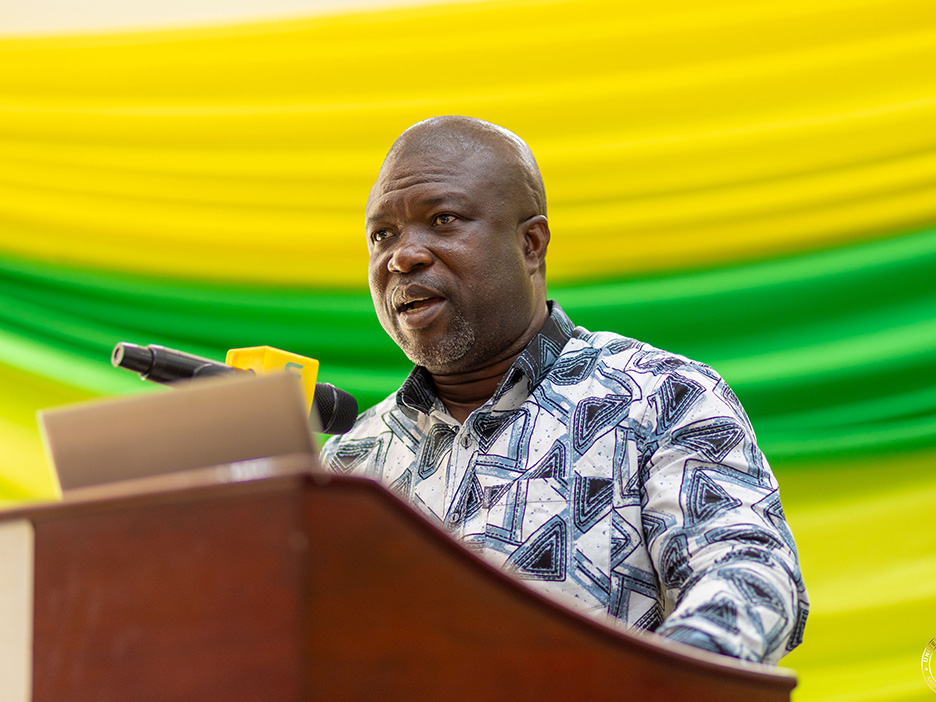
The Guest Speaker, a renowned global health expert and a former Director of the Swiss Tropical and Public Health Institute, Professor Emeritus Marcel Tanner called for stronger, long-term, equitable partnerships in global health research and action, emphasizing that a multidisciplinary collaboration is essential to achieving the Sustainable Development Goals (SDGs). Speaking on the theme “Collaborating Across Disciplines, Cultures and Borders Transforms Health to Achieve SDGs”, Professor Tanner posited that no single tool or approach can solve today’s complex health and development challenges and advocated for a combined and integrated approach that reflect socio-cultural, ecological and economic realities.
He said as globalization, mobility, demographic transitions and widening inequalities continue to shape health outcomes, the “SDG framework must guide our collective efforts.”
Professor Tanner highlighted how recent global crises, including pandemics and the rapid evolution of artificial intelligence, have exposed fragmentation in societies and weaknesses in inclusive institutions and stressed the need for a “culture of science and public health action that is based on negotiated partnerships involving the next generations.”
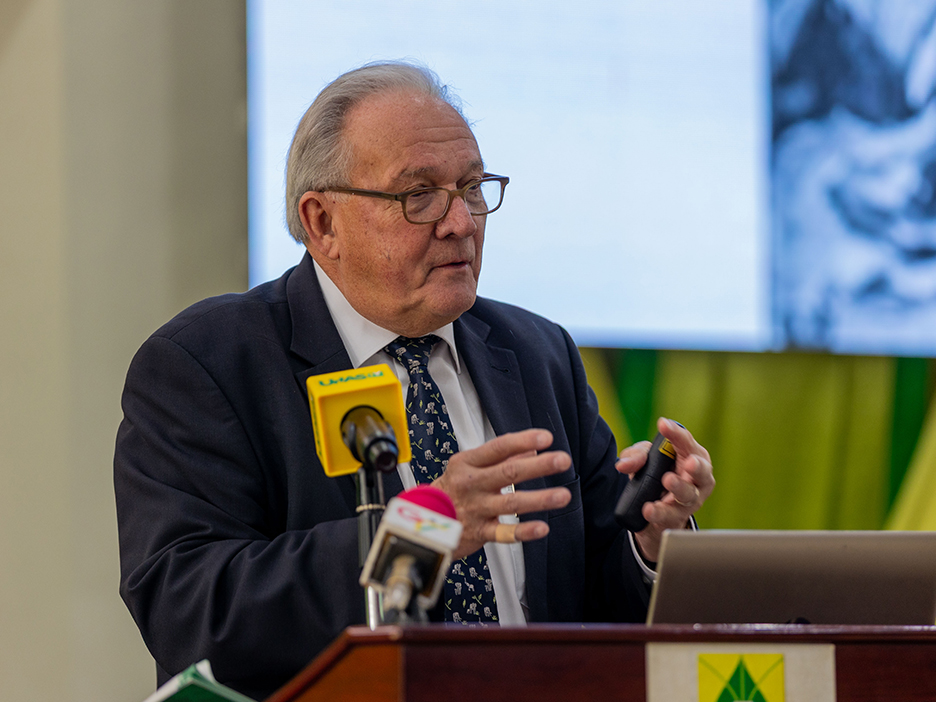
He called for the move from short-term projects to sustainable, long-term investments in research and public health systems, in strengthening capacities, reduce disparities and advance decolonization in global health. “We must repair the engine, not only the body and chassis.” he said, calling for research sites to evolve into fully-fledged centres of excellence with coherent pipelines spanning basic science, implementation research, training and service delivery.
Citing longstanding research partnerships in Ghana, Mozambique, Tanzania, Côte d’Ivoire and Mali, Professor Tanner explained the value chain from innovation to application, emphasizing that health research must bridge laboratory science, real-world field testing and integration into health systems. Professor Tanner explained ‘Partnership’ to mean mutual learning for change that applies to projects, strategies, institutions and funders.
Drawing from the 2025 Guide for Global Research Partnerships (GRP-Alliance), he outlined six principles for equitable research collaboration: joint agenda-setting, managing power dynamics, defining clear roles, promoting mutual learning, sharing results for impact and building long-term partnerships. He stressed that competence, ethical standards, contextual sensitivity and strong communication must underpin all scientific endeavours.
Reflecting on the path toward the SDGs, particularly Goals 3 (Good Health and Well-being), 4 (Quality Education), 6 (Clean Water and Sanitation), 8 (Decent Work and Economic Growth) and 17 (Partnerships for the Goals), he called for systemic, interdisciplinary approaches and research agendas that prioritize equity and well-being.
Professor Tanner concluded his presentation by declaring that “We must stay humble in our roles and responsibilities. It is not about creating great things but about doing the ordinary things with conviction and appreciation for their intrinsic value.”
He expressed deep gratitude to colleagues and partners across the global public health community, acknowledging that mutual learning across systems and cultures remained the foundation for change.
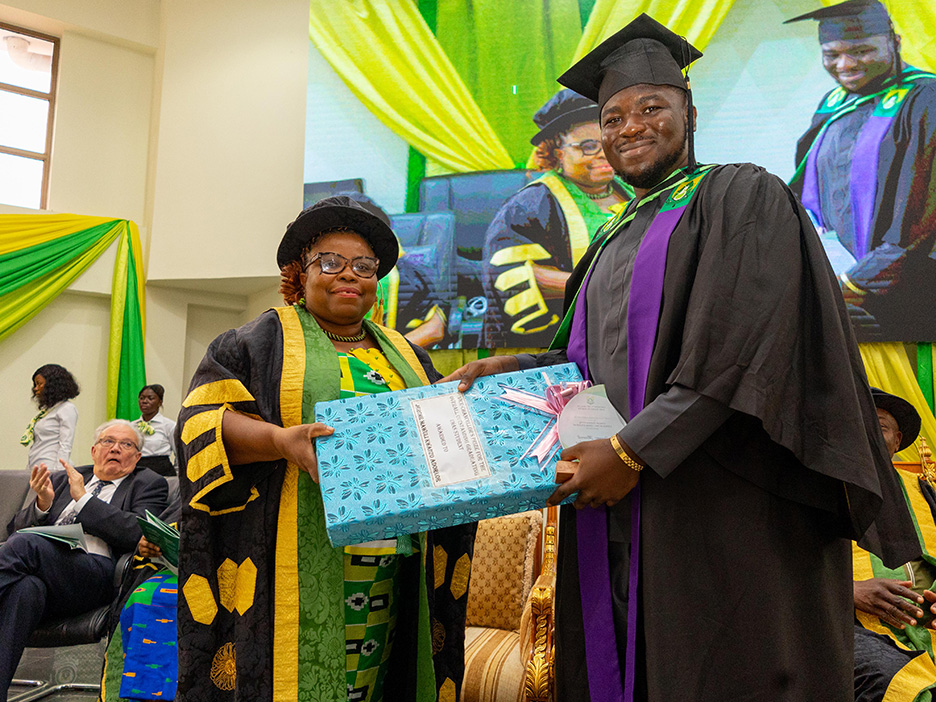
Mr. Jerome Mawuli Kwadzo Adorkor of the UHAS School of Basic and Biomedical Sciences emerged the overall best graduating student for the regular 2024/2025 academic year.
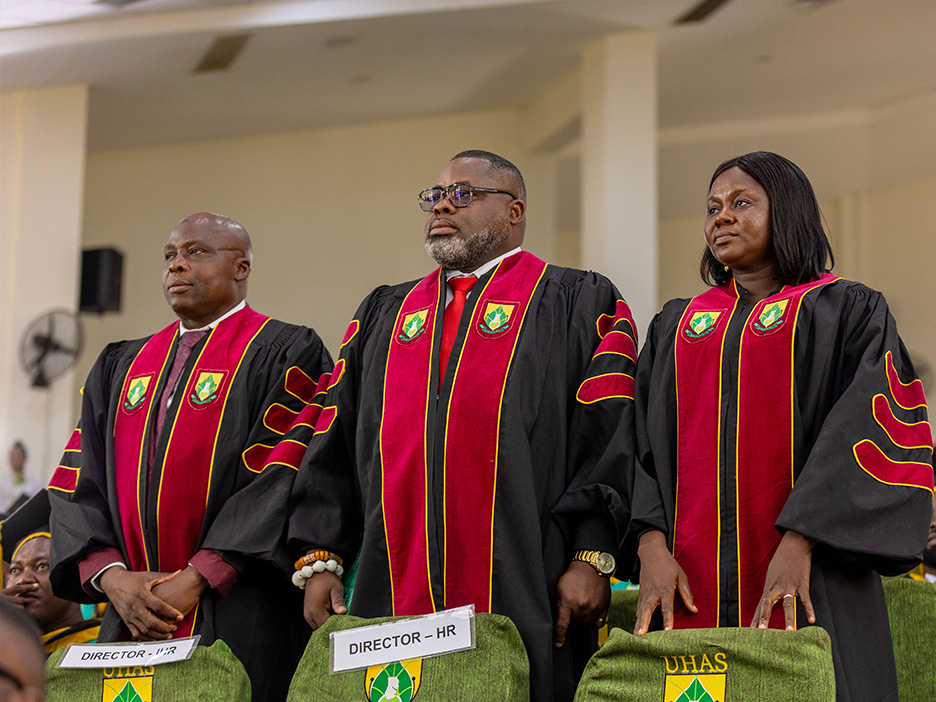
The day’s ceremony, which comprised both morning and afternoon sessions brought together esteemed dignitaries including traditional leaders, faculty, staff, alumni and excited family members of the graduates.
The ceremony showed UHAS as a giant which is indeed rising, living up to its mandate of practical orientation, research and community service.