May 15, 2026
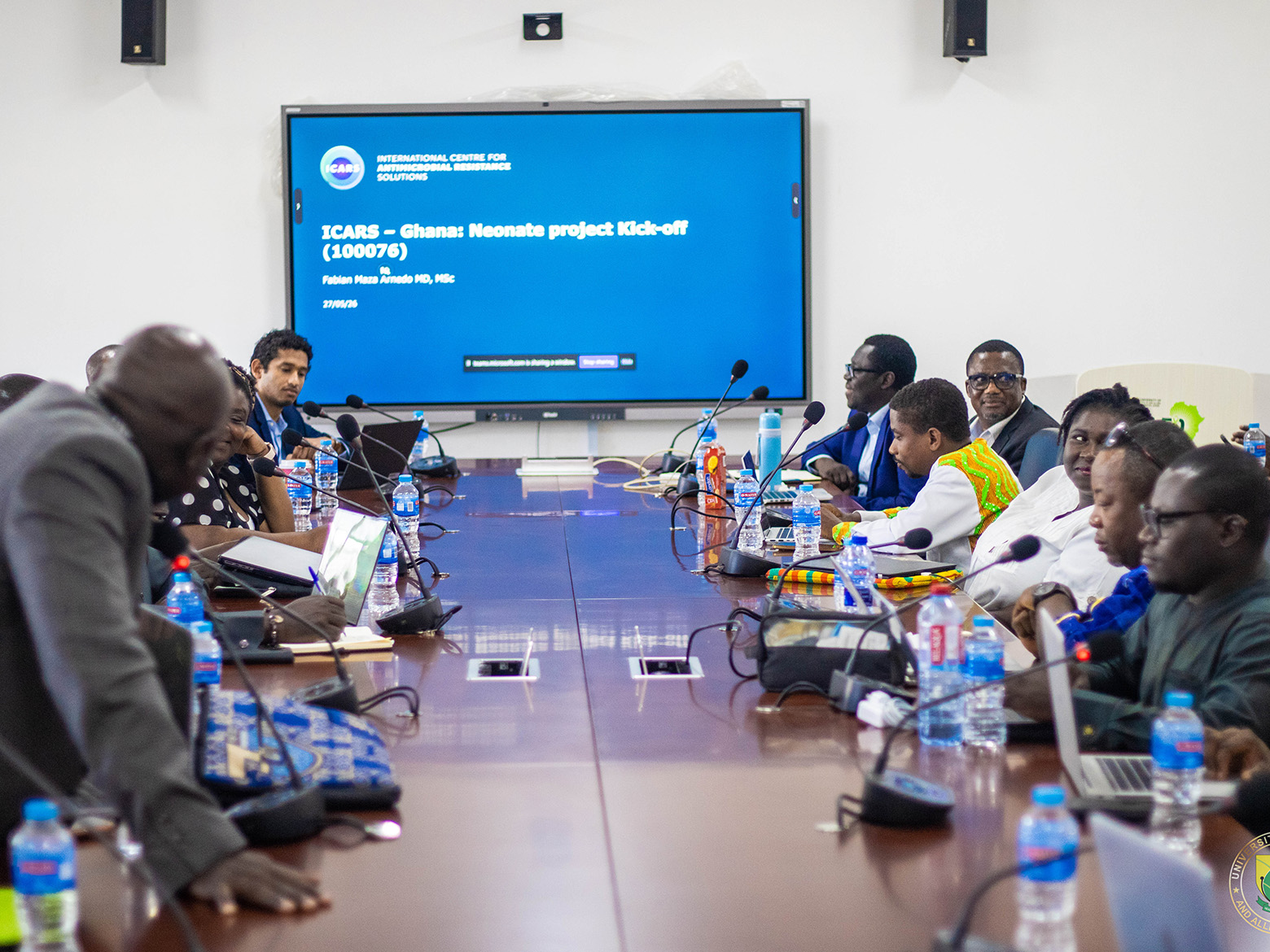
The University of Health and Allied Sciences (UHAS), in collaboration with the International Centre for Antimicrobial Resistance Solutions (ICARS) and Ghana’s Ministry of Health (MoH), has launched a groundbreaking research initiative to tackle neonatal infections and antibiotic resistance in the Volta Region. The official launch took place on Thursday, May 7, 2026, at the UHAS Main Campus in Ho.
The Principal Investigator of the Project, Dr. Kokou Amegan-Aho, a Senior Lecturer at UHAS School of Medicine, highlighted the urgency, stating that up to 60% of neonates admitted to intensive care units may suffer infections, with about three out of four infections acquired in healthcare facilities and resistant strains of Klebsiella and E. coli leaving first-line treatments ineffective. He related, among other things that, that the project, as a solution, seeks to reduce neonatal infections by 20% across four hospitals.
The initiative, titled Enhancing Infection Prevention and Rational Antibiotic Use for Neonatal Infection in Four Health Facilities in the Volta Region, Ghana, will strengthen Infection Prevention and Control (IPC) and Antimicrobial Stewardship (AMS) practices at facility level; Implement five interconnected work packages covering diagnostics, behavioural change, economic evaluation, and policy; Progress through three phases - baseline assessment, co-creation with facility staff and implementation with evaluation.
Participating hospitals include Ho Teaching Hospital, Volta Regional Hospital (Hohoe), Margaret Marquart Catholic Hospital (Kpando) and Keta Municipal Hospital.
The Vice Chancellor of UHAS, Prof. Lydia Aziato praised the multidisciplinary collaboration and urged similar partnerships across UHAS.
Speaking on behalf of Prof. Frank Edwin, the Pro-Vice Chancellor of UHAS, Prof. Kwame Ohene Buabeng, Dean of UHAS School of Pharmacy, emphasized alignment with Ghana’s National Antimicrobial Stewardship Strategy, calling the project a flagship of national relevance.
Prof. Evelyn Ansah of UHAS Centre for Malaria Research at UHAS Institute of Health Research (IHR) urged participants to uphold principles of collaboration over competition, quality over speed and impact over output.
Echoes of support were received from partners during the launch programme: ICARS Science Officer Fabian Augusto Maza Arnedo described the project as a model of ICARS’ combined top-down and bottom-up approach; WHO’s George Hedidor confirmed WHO’s role on the Steering Committee, calling the methodology “precisely the approach WHO advocates.”; UNICEF, Ghana Health Service and Volta Regional Directorate of Health Services pledged commitment, while hospital representatives stressed sustainability beyond the funding period.
The core management team of the project includes Dr. Matilda Aberese-Ako (Director of the Centre for Malaria Research at UHAS Institute of Health Research) and Prof. Buabeng, supported by experts in Infection Control, AMS, Behavioural Science, Economics and Policy. Oversight will be provided by a steering committee featuring Prof. Evelyn Ansah and Prof. Margaret Gyapong (Professor of Applied Health Social Science and Global Health at the Centre for Health Policy at UHAS-IHR).
If successful, the initiative could serve as a replicable model for integrated infection prevention, antimicrobial stewardship and diagnostic strengthening across Ghana and the wider sub-Saharan region.