The University of Health and Allied Sciences (UHAS), through its School of Graduate Studies, has successfully held a three-day workshop on intervention mapping aimed at strengthening capacity in the design, implementation and evaluation of evidence-based health interventions.
The workshop, held from Wednesday, July 8 to Friday, July 10, 2026, at the University's Main Campus at Sokode-Lokoe, Ho, brought together participants from diverse health and research backgrounds for intensive training led by Professor Rob Ruiter, Vice-Dean of Education at the Faculty of Psychology and Neuroscience, Maastricht University, Netherlands.

Welcoming participants, the Dean of the UHAS School of Graduate Studies, Professor Martin Ayanore, underscored the importance of building expertise in intervention design to address emerging public health challenges. He encouraged attendees to make the most of the opportunity for learning, collaboration and professional development.
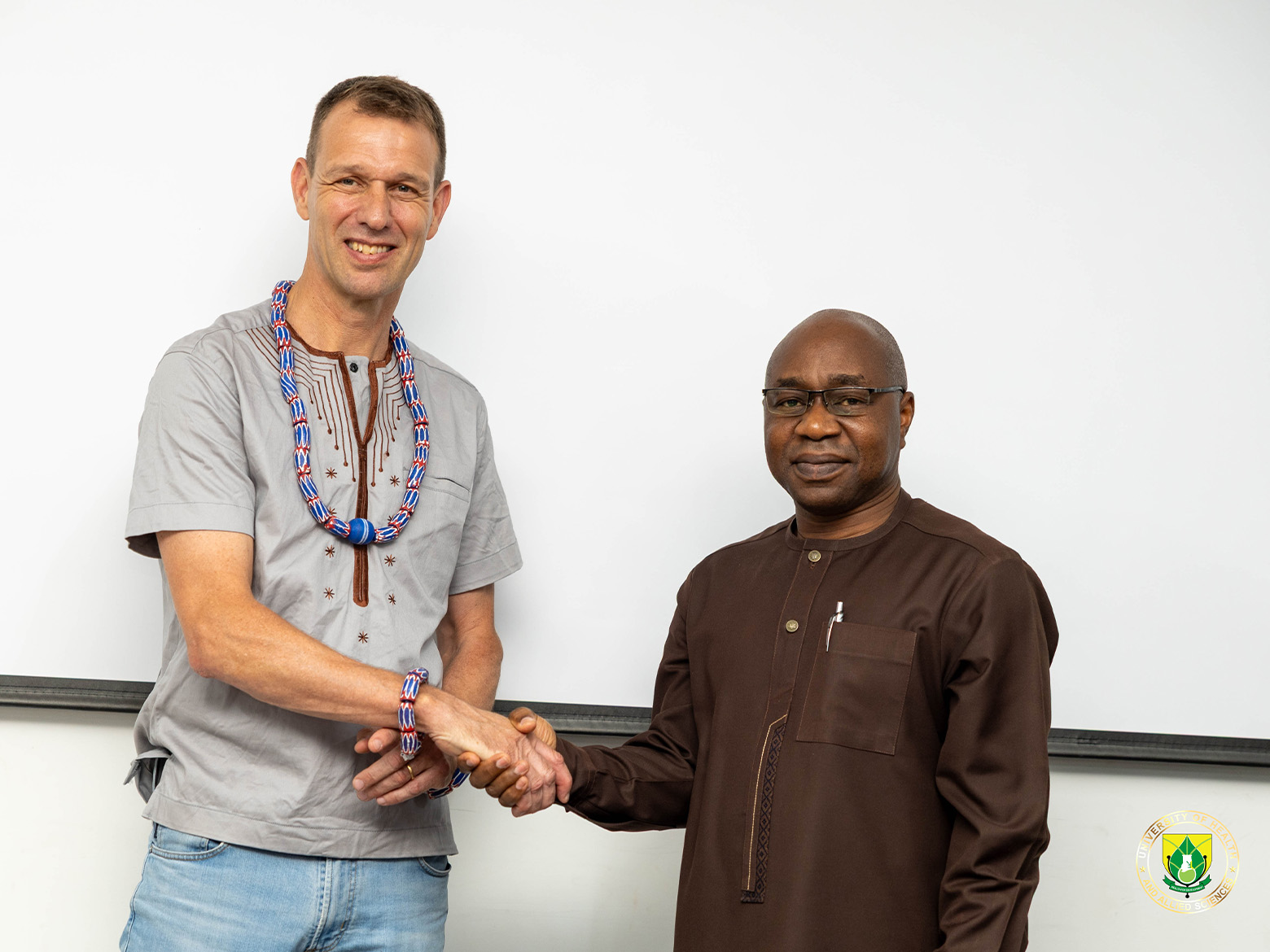
A highlight of the programme was the presentation of Intervention Mapping books by Prof. Ruiter to UHAS, symbolising the growing academic partnership between the two institutions. The books were received on behalf of the University by the Pro-Vice Chancellor, Professor Frank Edwin and Prof. Ayanore.
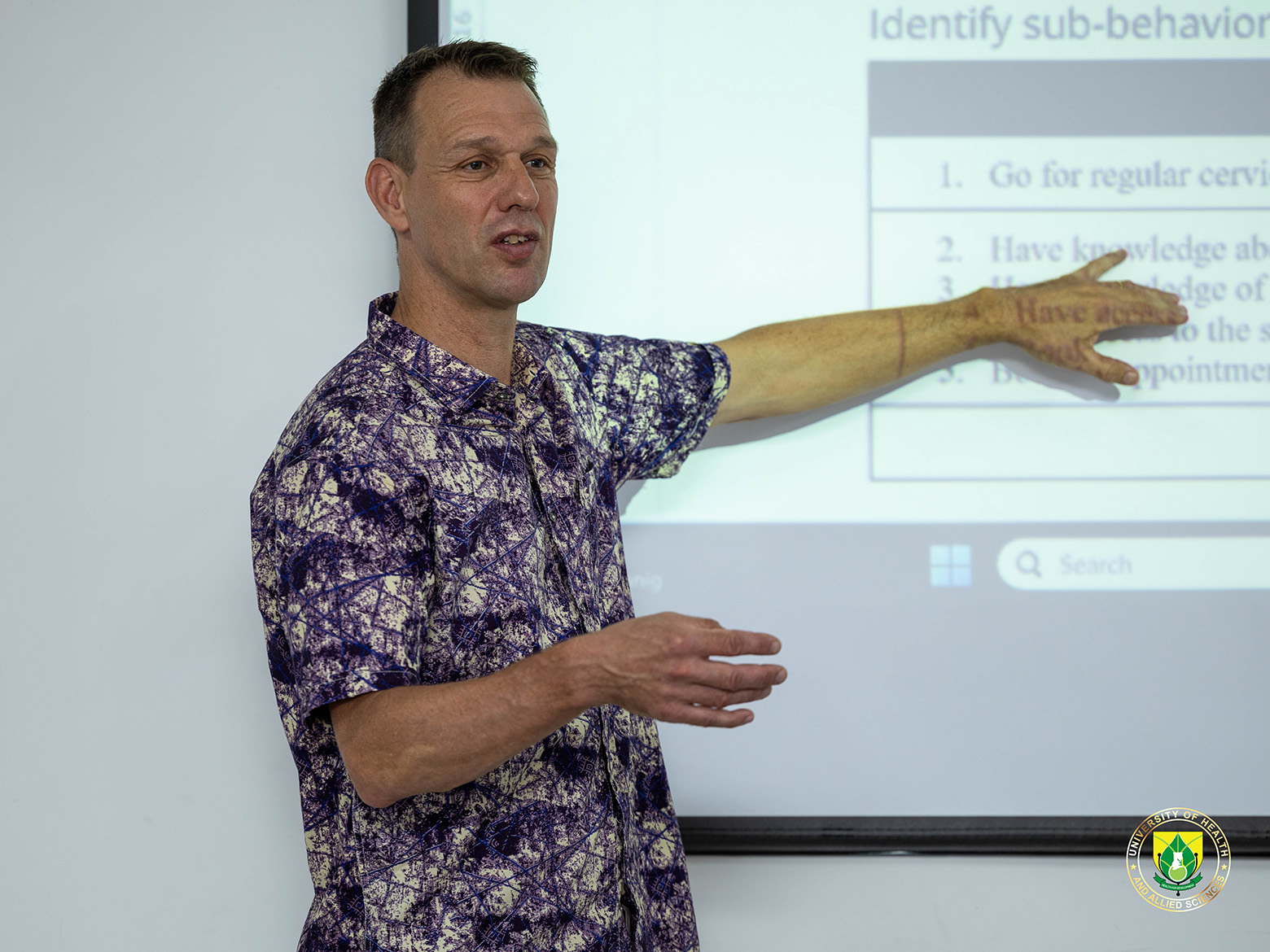
Throughout the workshop, Prof. Ruiter guided participants through the six-step Intervention Mapping framework, an internationally recognized approach that integrates behavioural and social science theory, empirical evidence and stakeholder engagement to develop effective and sustainable health programmes. Sessions covered needs and assets assessment, logic model development, formulation of programme objectives, behavioural change strategies, theory-based intervention design, implementation planning and evaluation.

Participants examined practical case studies in areas such as smoking cessation, HIV treatment adherence, childhood asthma management, skin cancer prevention and COVID-19 vaccination uptake. The training emphasized the application of behavioural theories, including the Reasoned Action Approach and the Theory of Planned Behaviour, to develop targeted and contextually relevant interventions.
The final sessions focused on Implementation Mapping and implementation science frameworks, including RE-AIM, the Consolidated Framework for Implementation Research (CFIR) and the Theoretical Domains Framework (TDF). Discussions highlighted the importance of intervention adoption, fidelity, sustainability and long-term impact in achieving improved public health outcomes.
Closing the workshop, Prof. Ruiter commended participants for their enthusiasm, intellectual engagement and valuable contributions, expressing confidence that the knowledge and skills acquired would enhance research and evidence-based practice across their respective fields.
Prof. Edwin thanked the facilitator and participants for their commitment and urged them to apply and share the lessons learned. He expressed optimism that the training would leave a lasting impact on public health scholarship, research and practice at UHAS and beyond.